Hydration Timing: When to Drink for Training, Not Just How Much
Hydration advice fixates on daily totals — the gallon jugs, the eight glasses — while performance lives in TIMING: the pre-loaded session, the during-dose matched to sweat and the recovery that actually restores. The timing framework, plus the self-test that personalizes it.

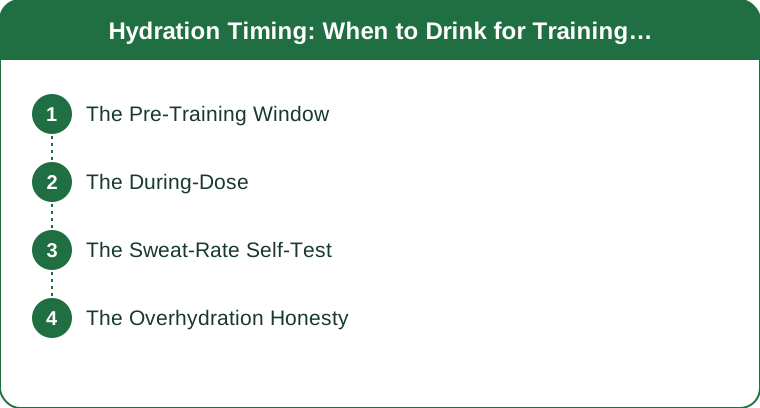
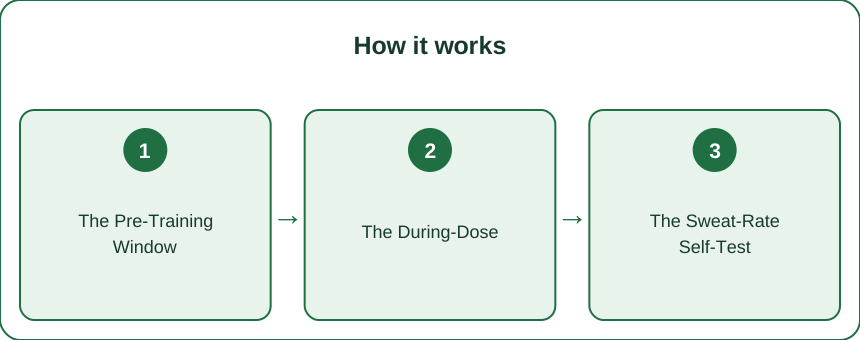
The Pre-Training Window
Arriving hydrated: the two-hour rule (400-600ml roughly two hours before training — the dose that absorbs and excretes its excess before the warm-up; the chugging-at-the-door alternative just schedules a mid-workout bathroom negotiation), the morning-session amendment (the overnight deficit means dawn trainers pre-hydrate on waking — the water-before-coffee move from the morning stack, promoted to protocol), the urine dashboard (pale straw at session start is the checkmark — the free hydration test nobody needs an app for), and the pre-loading honesty (you can’t camel-up days ahead — hydration is a rolling account, not a reservoir; yesterday’s gallon doesn’t fund today’s session).
The During-Dose
Drinking to sweat, not schedule: the duration gates (sessions under 60 minutes in normal conditions run fine on pre-hydration alone — the water bottle is comfort, not requirement; the hot-or-long tier is where during-drinking earns its place), the sip-not-chug pattern (150-250ml every 15-20 minutes when drinking matters — the gut absorbs sips and sloshes chugs), the thirst-plus honesty (thirst lags in hard efforts and leads fine in easy ones — scheduled sips for the long-hot sessions, thirst-guided for the rest), and the electrolyte crossover (the 90-plus-minute and heavy-sweat sessions bring the sodium math from the electrolyte chapter — water alone past that line dilutes what sweat spent).

The Sweat-Rate Self-Test
Personalizing the numbers: the weigh-in protocol (naked-ish weight before and after a timed session, drinking measured amounts during — each kilogram lost beyond intake is roughly a liter of sweat; the one-hour test that converts generic advice into YOUR number), the conditions note (test in your actual training conditions — the summer rate can double the winter one; two tests bracket the year), the application math (replacing roughly 100-150% of losses across the post-session hours — not all at once; the recovery is a rehydration schedule, not a chug), and the salty-sweater identification (the white-crusted cap and the stinging eyes are the high-sodium-sweat tells — the population whose electrolyte math runs steeper).
The Overhydration Honesty
The other ditch: the too-much problem is real (overdrinking plain water during long events dilutes blood sodium — the hyponatremia risk that endurance medicine warns about harder than dehydration these days; more is emphatically not safer past need), the signs literacy (clear urine constantly, sloshing, puffiness and headache during long efforts — the overdid-it markers), the sane middle (the sweat-tested, thirst-respecting, sodium-aware protocol above — hydration as matched replacement, not maximized intake), and the daily-life perspective (outside training, thirst and pale-straw urine govern fine — the gallon-jug culture solved a problem most people didn’t have; the timing around sessions was the actual gap). Drink to the session, test your sweat, respect both ditches.
Pre-load two hours out, sip by the clock only when long or hot, test your sweat rate once, more isn’t safer. Hydration is timing and matching — the jug was never the point.
Keep Reading
This article is for general informational purposes only and is not medical advice. Always consult a qualified health professional for guidance specific to you.