When You Should Actually Take Electrolytes — Not Just How Much
Quick Answer: For workouts under 60 minutes, electrolytes generally aren’t necessary beyond normal hydration. For sessions over 60-90 minutes or in heat, a small amount 30 minutes before, sipped during, and a full serving within 30 minutes after covers the timing that matters most.
Electrolyte packets are everywhere now, and most advice focuses on how much sodium or potassium to get — but timing changes how effective that same amount actually is.

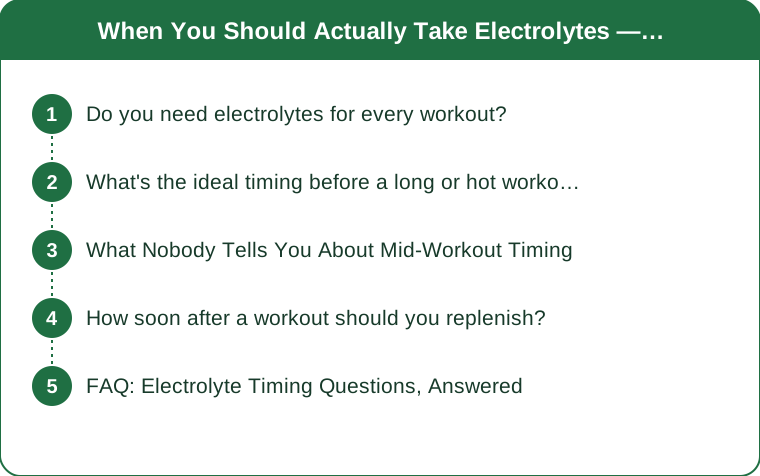
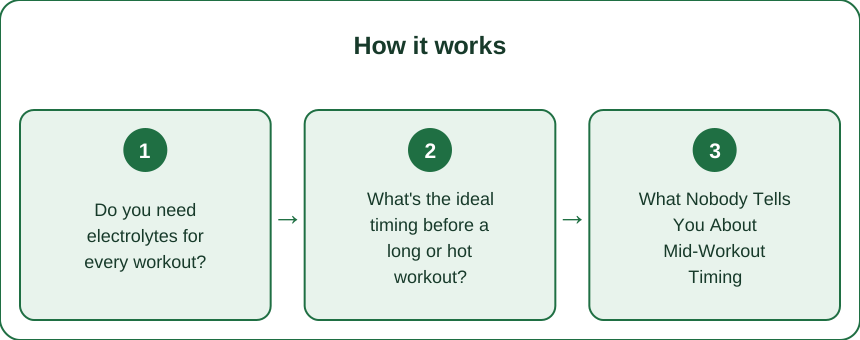
Do you need electrolytes for every workout?
No — for workouts under about 60 minutes at moderate intensity, plain water is usually sufficient for most people, since sweat losses over that duration are typically modest enough for your normal diet to replace afterward.
Electrolytes become more relevant past the 60-90 minute mark, in hot or humid conditions, or if you’re a noticeably heavy sweater — all situations where sodium loss climbs faster than water loss alone accounts for.
What’s the ideal timing before a long or hot workout?
A small dose (roughly a quarter to half of a standard serving) about 30 minutes before starting helps pre-load sodium levels without causing the bathroom urgency a full dose right before exercise can trigger.
Drinking a large amount of plain water alone right before a long, sweaty session can actually dilute existing sodium levels slightly — a small electrolyte dose beforehand helps offset that.

What Nobody Tells You About Mid-Workout Timing
Most people either skip electrolytes during exercise entirely or chug a full serving all at once mid-session — both miss the point. Sipping small amounts every 20-30 minutes during a long workout matches how your body actually loses sodium: gradually through sweat, not in one burst.
The mistake that surprises most people: taking a full electrolyte dose in the first 10 minutes of a long workout does almost nothing for the fatigue that shows up at minute 50 — by then it’s already been absorbed and partially used.
How soon after a workout should you replenish?
Within 30 minutes post-workout is the practical window — sodium and fluid replacement during this time supports faster rehydration than waiting until your next meal hours later.
A full serving post-workout, paired with a normal meal within the next 1-2 hours, covers replacement for most moderate-to-long sessions without needing to obsess over exact grams.
FAQ: Electrolyte Timing Questions, Answered
Can I just drink electrolytes all day instead of timing them around workouts?
You can, but it’s less necessary and potentially unnecessary sodium intake if you’re not sweating heavily — timing around actual exercise is more efficient than constant sipping.
Is it bad to take electrolytes on an empty stomach before a morning workout?
Generally fine in small doses, though very concentrated electrolyte drinks can cause mild stomach upset for some people fasted — diluting with extra water helps.
Do electrolyte needs change with the seasons?
Yes — hot, humid conditions increase sweat sodium loss significantly compared to cool weather, so summer workouts often warrant more deliberate electrolyte timing than winter ones at the same intensity.
TL;DR:
- Workouts under 60 minutes usually don’t need added electrolytes beyond normal water
- A small dose 30 minutes before a long or hot session pre-loads sodium without bathroom urgency
- Sip small amounts every 20-30 minutes during long workouts rather than one big dose
- Replenish within 30 minutes after finishing for the fastest recovery window
It’s not just what’s in your bottle — it’s when you actually drink it that determines whether electrolytes do their job.
Keep Reading
This article is for general informational purposes only and is not medical advice. Always consult a qualified health professional for guidance specific to you.